Laser source development
Laser pumping and seeding
Sophisticated laser systems, such as OPCPA systems, typically consist of multiple parts, with the most essential being the front-end used for pumping and seeding.
Introduction
Why a front-end matters
Sophisticated scientific laser systems, such as optical parametric chirped-pulse amplification (OPCPA) systems, typically consist of multiple parts, with the most essential often being the front-end used for laser pumping and seeding.
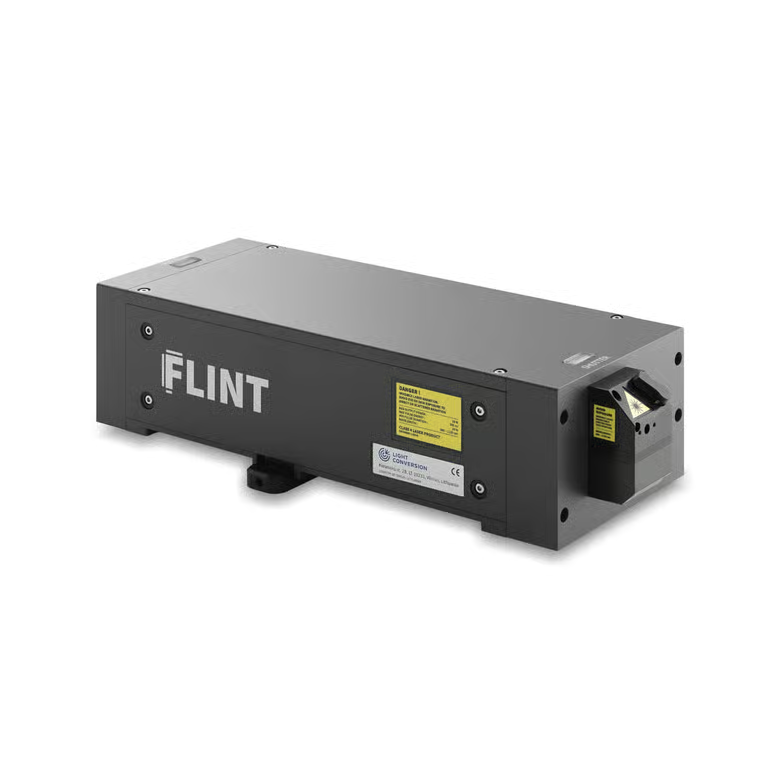
FLINT as seed and OPO pump
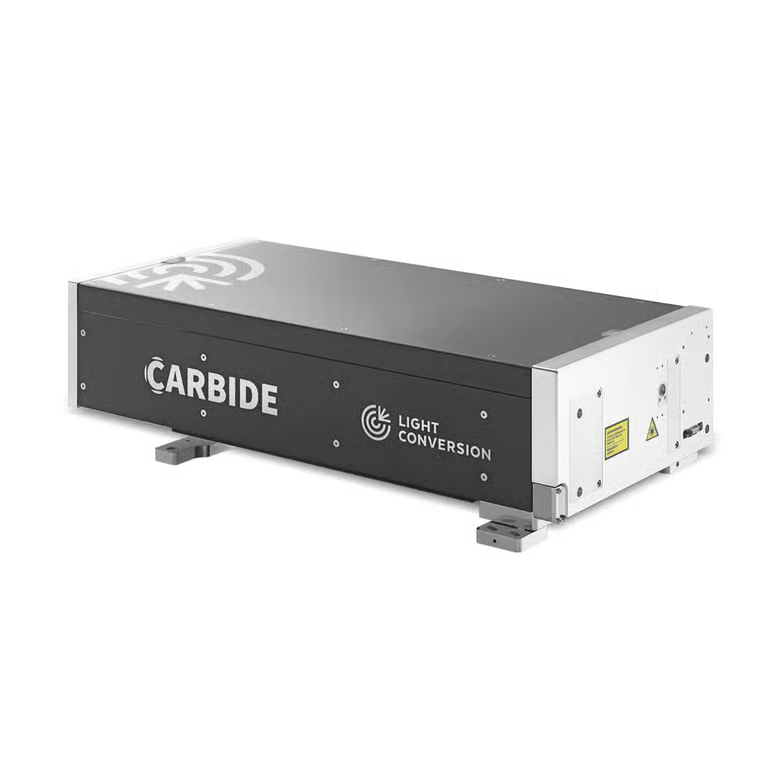
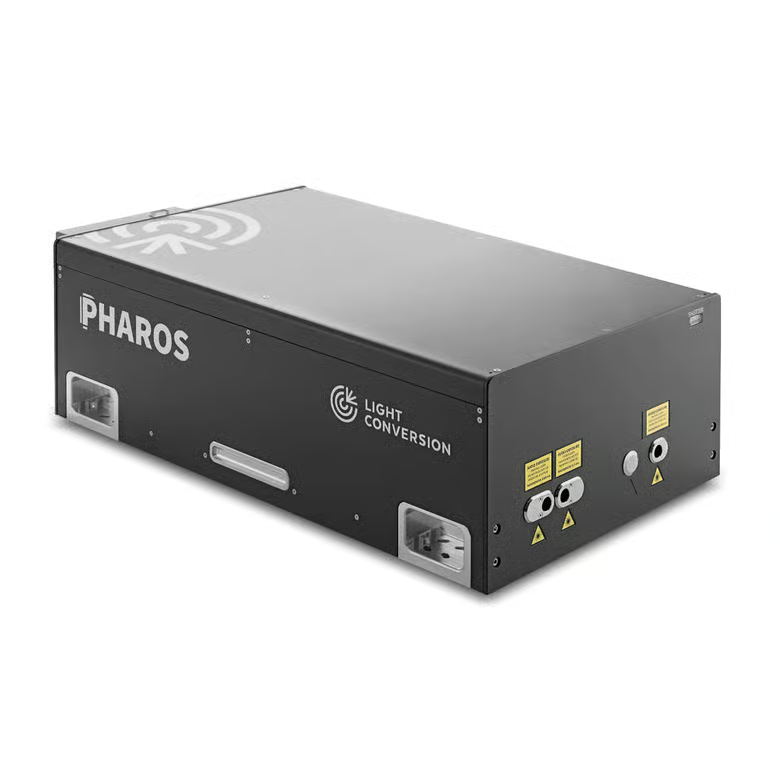
FLINT femtosecond oscillators, built on the same industrial-grade design as the CARBIDE and PHAROS families, exhibit an output power of 20 W and sub-40 fs pulse duration. These oscillators support carrier-envelope phase (CEP) stabilization and repetition-rate locking to an external reference. The FLINT oscillator is used for seeding Yb/Nd-based ultrashort pulse laser amplifiers and pumping femtosecond optical parametric oscillators (OPOs). If CEP-stable output is desired, the FLINT oscillators (or oscillator output from PHAROS lasers) can be used to seed other laser sources.
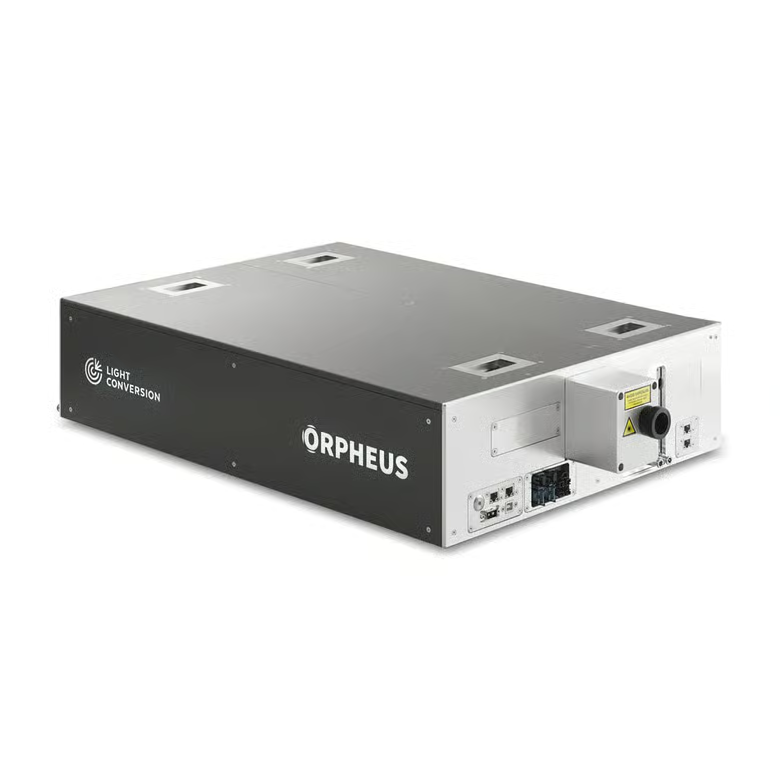
ORPHEUS-OPCPA as a high-contrast seed
Due to inherently high-contrast output pulses, ORPHEUS-OPCPA has been adopted as a front-end in ultra-high intensity lasers. Benefiting from the stability of CARBIDE and PHAROS lasers, it delivers few-cycle, CEP-stable pulses in a package as compact as standard parametric amplifiers and serves as a seed source for larger amplifiers, delivering background-free pulses with near-single-cycle bandwidths, excellent spectral phase coherence, and CEP stability. For example, this front-end provided seed pulses for a pump and optically synchronized signal pulses for three consecutive OPCPA stages in a 4.4 TW OPCPA system.