Pize is an AI coding assistant for scientific computing and statistical analysis. It runs in Pize Code and Positron, and also ships as an SDK.

Scientific applications
Scientific applications
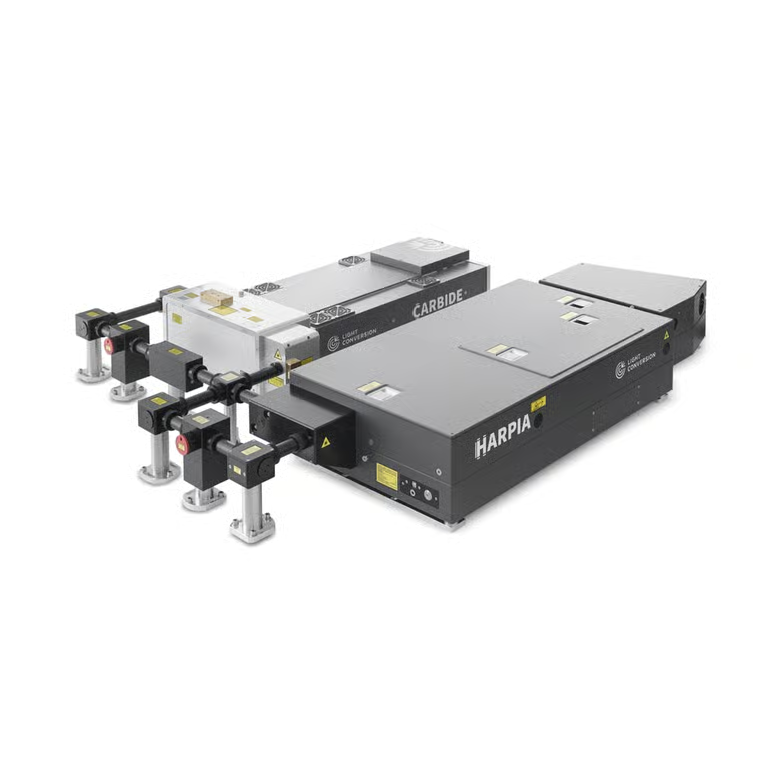
Five scientific groups: ultrafast spectroscopy, advanced microscopy, nonlinear and extreme light generation, laser source development, and micro- and nanofabrication. Other applications in this catalog are listed below.
Scientific applications
Ultrafast spectroscopy
Transient absorption, time-resolved fluorescence, femtosecond stimulated Raman, transient grating, sum-frequency generation, TR-ARPES, two-dimensional electronic and infrared spectroscopy, flash photolysis, and Z-scan.
Scientific applications
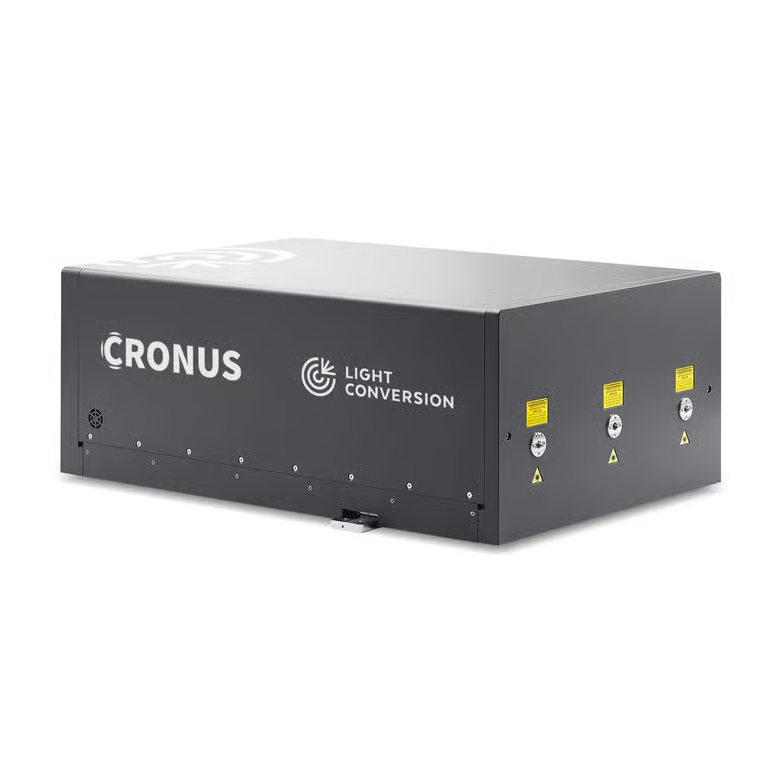
Advanced microscopy
Transient absorption microscopy, nonlinear microscopy in biological tissues and solid-state materials, ultrafast electron microscopy, and Raman microscopy (CARS & SRS).
Scientific applications
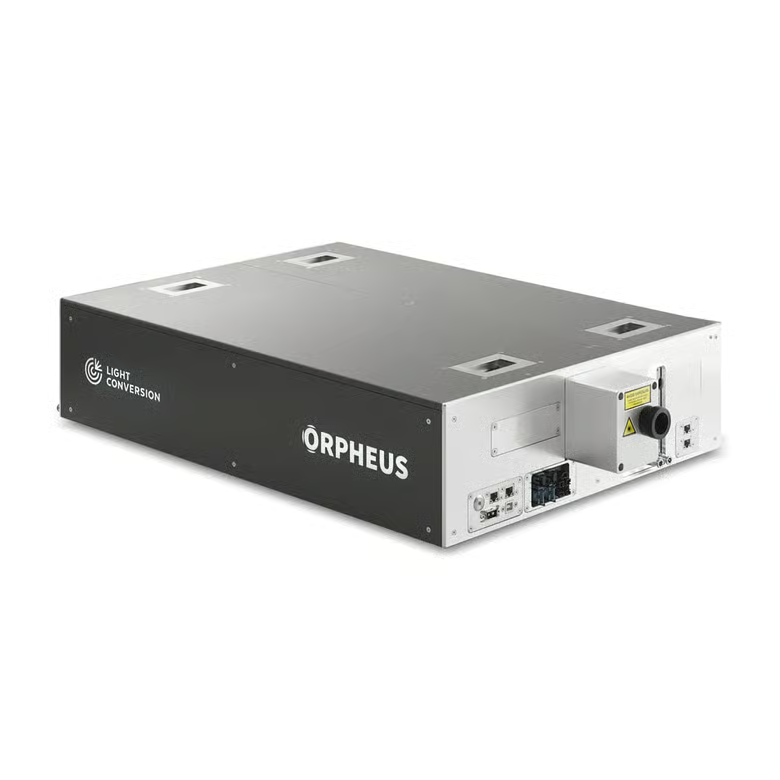
Nonlinear and extreme light generation
High harmonic generation, nonlinear optics, X-ray generation, and THz generation.
Scientific applications
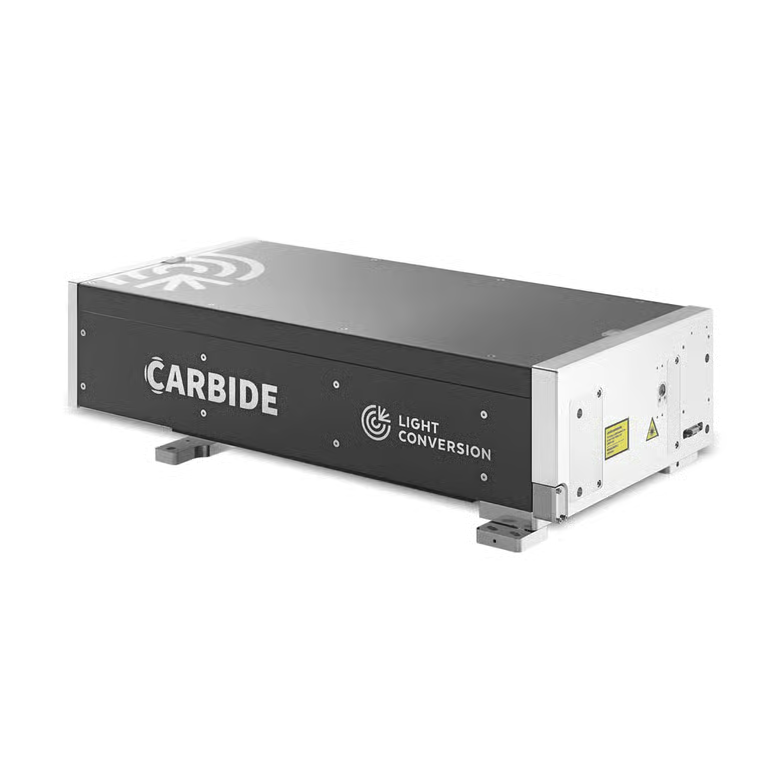
Laser source development
Laser pumping and seeding, carrier-envelope phase stabilization, repetition rate locking, and optical parametric chirped-pulse amplification.
Scientific applications
Micro- and nanofabrication
Photopolymerization, surface nanostructuring, color center formation, volume modification, and laser-tissue interaction.
Other applications
Questions
Can Pize analyze and post-process data collected with instruments used for Scientific applications?
Yes. Pize can perform scientific analysis on data collected with those instruments, including computation and downstream research-data processing.
What data can Pize read?
It detects delimiters, headers, missing values, and column types from the content. Beyond text tables it reports how to open containers such as Parquet, RDS, h5ad, SPSS, and Stata. Over-budget files get a data card. The whole table is not stuffed into context.
Does Pize use R or Python?
Both. After you confirm, Pize can generate and run R or Python in the current session and return real output.