Laser source development
Repetition rate locking
A synchronized laser system enables time-resolved experiments and can also be used as a synchronized switch for other physical variables, such as a magnetic field.
Introduction
What repetition-rate locking is used for
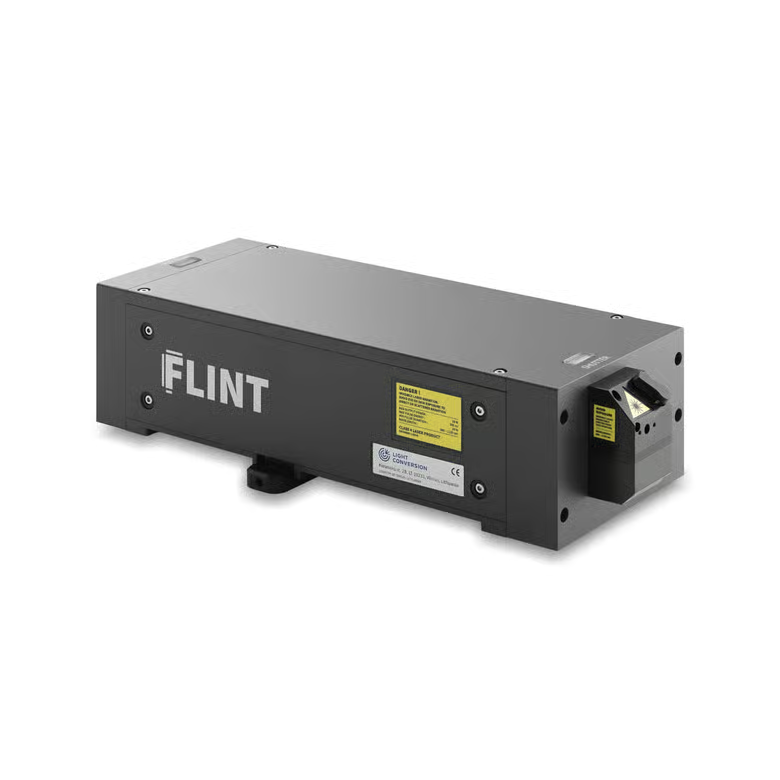
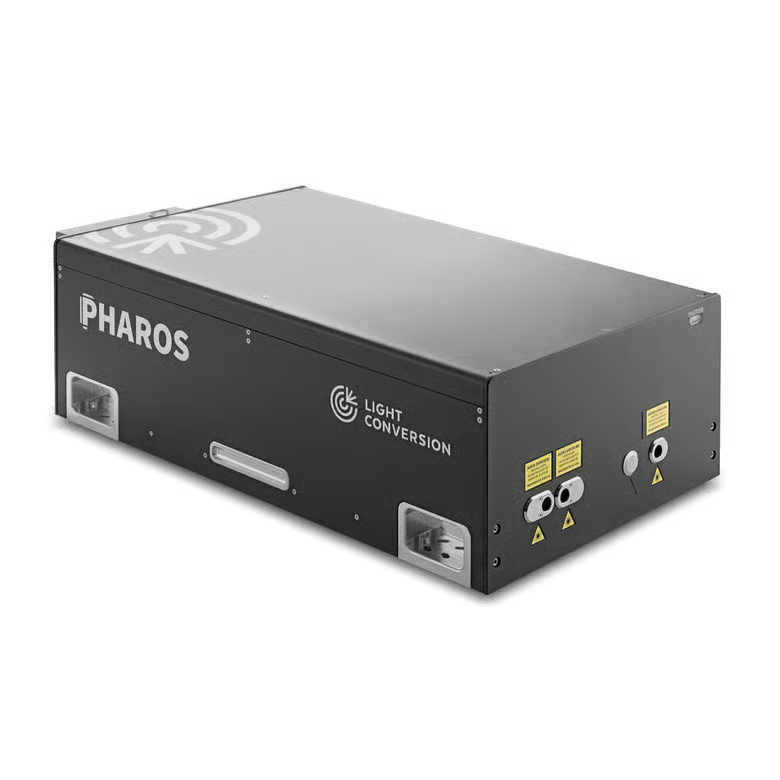
FLINT femtosecond oscillators and PHAROS femtosecond lasers are used for repetition rate locking applications, notably for locking and synchronization to synchrotrons such as the storage-ring-based X-ray source PETRA III at DESY. Synchronized laser systems enable time-resolved experiments and can also be used as synchronized switches for other physical variables, such as magnetic fields.
How the lock is made
Coupled with the necessary feedback electronics, the repetition rate of FLINT or PHAROS femtosecond lasers is synchronized to an external RF source using the two piezo stages installed inside the cavity. The repetition rate locking system can assure an integrated timing jitter of less than 200 fs for RF reference frequencies larger than 500 MHz. Continuous phase shifting is available on request.
PHAROS phase noise
Phase noise data of PHAROS oscillator locked to a 2.8 GHz RF source.
PHAROS timing jitter
Timing jitter stability over 14 h; PHAROS oscillator locked to a 2.8 GHz RF source.
FLINT phase noise
Phase noise data of FLINT oscillator locked to a 2.8 GHz RF source.
FLINT timing jitter
Timing jitter stability over 14 h; FLINT oscillator locked to a 2.8 GHz RF source.