Ultrafast spectroscopy
Z-scan
The Z-scan experimental technique is used for measuring the nonlinear refractive index and nonlinear absorption coefficient of optical materials.
Introduction
What is Z-scan?
The Z-scan experimental technique is used for measuring the nonlinear refractive index and nonlinear absorption coefficient of optical materials. The sample is translated along the optical path of a focused laser beam, and the intensity is recorded simultaneously with open-aperture and closed-aperture photodiodes.
How the traces are read
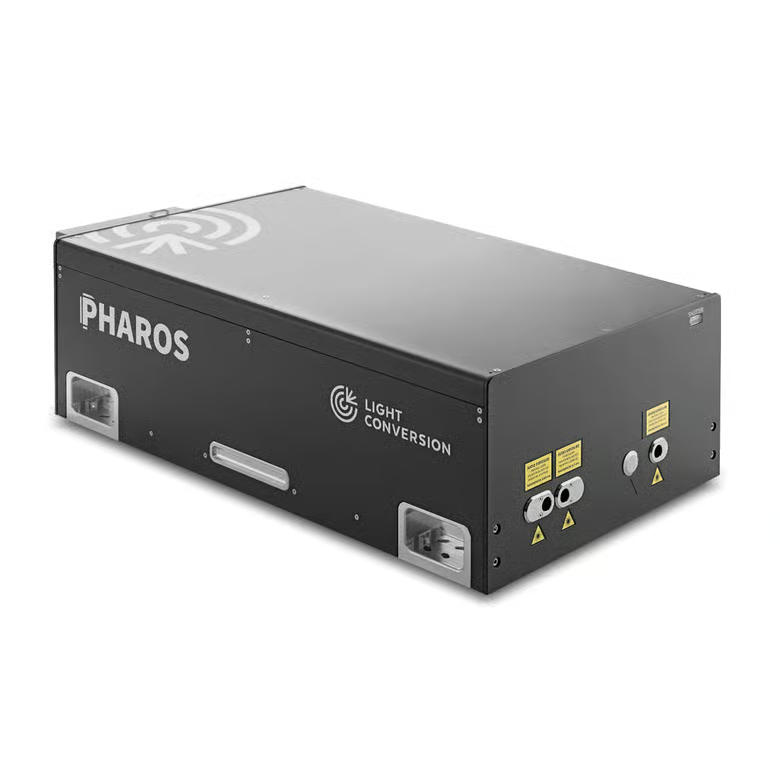
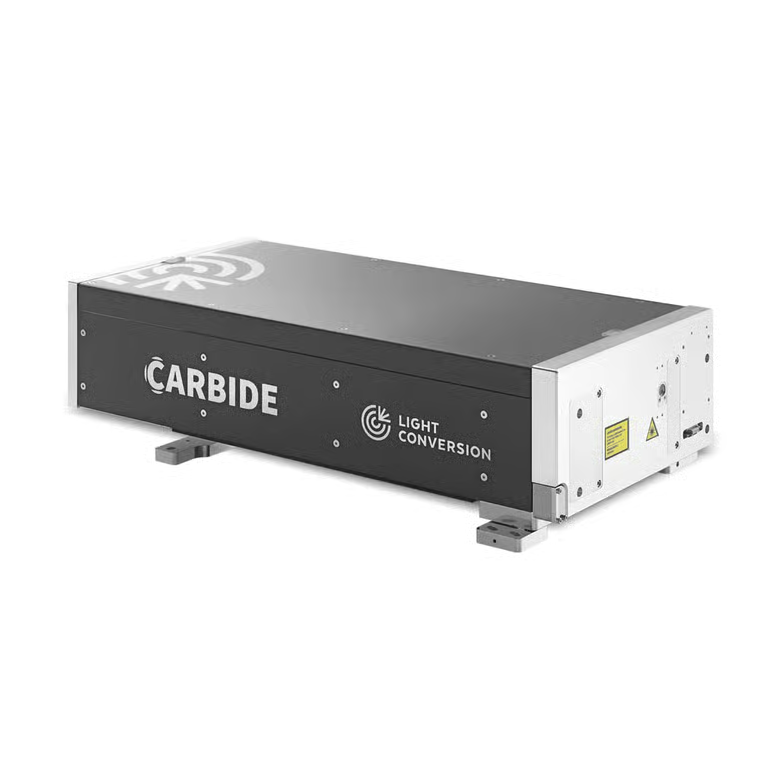
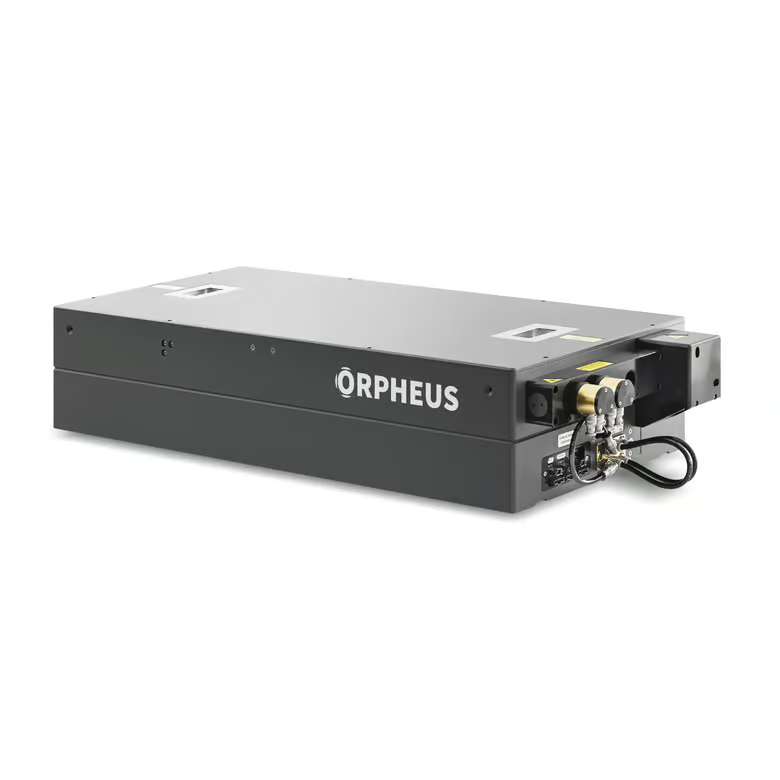
Near the beam focus, changes in the closed-aperture signal come mainly from nonlinear-refraction-induced self-focusing, while the open-aperture deviation is mostly nonlinear absorption. Simultaneous fitting of the two traces identifies both nonlinear parameters. The measurement can be carried out with a CARBIDE or PHAROS femtosecond laser and an ORPHEUS optical parametric amplifier, so the dispersion of the nonlinear parameters can be recorded as well.