Ultrafast spectroscopy
Femtosecond stimulated Raman spectroscopy
Time-resolved spectroscopy technique for observing changes in the vibrational structure of optically excited molecular systems.
Introduction
What is FSRS?
Femtosecond stimulated Raman spectroscopy (FSRS) is a time-resolved technique for observing changes in the vibrational structure of optically excited molecular systems. An ultrashort actinic pump initiates the photoreaction. A picosecond Raman pump and a broadband femtosecond Raman probe then overlap on the sample: their temporal overlap writes coherence in the excited state and amplifies Stokes and anti-Stokes frequencies in the probe, i.e. stimulated Raman emission. Because that coherence lives only during the short overlap, FSRS keeps high resolution in both the spectral and temporal domains.
How it is implemented
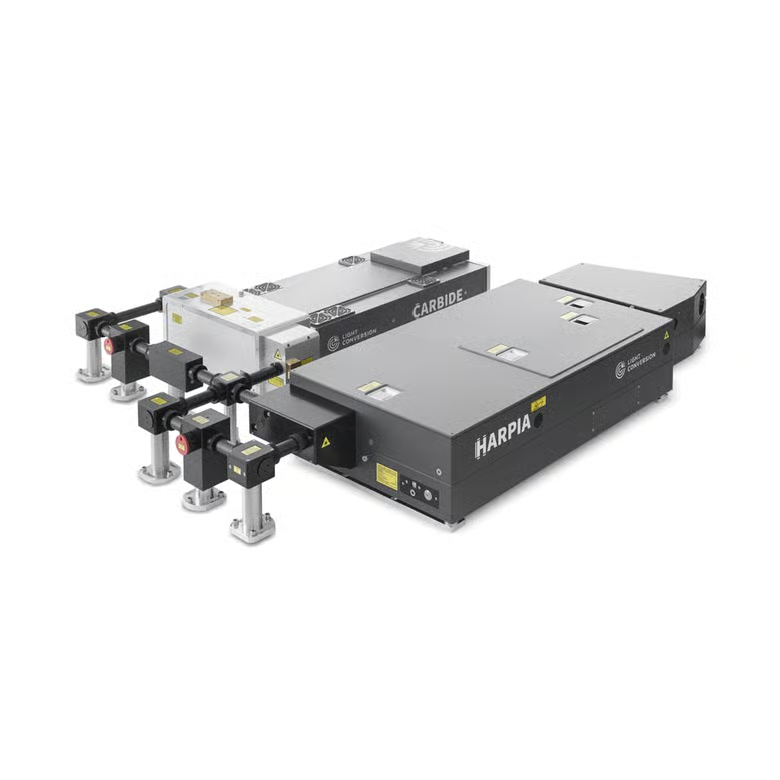
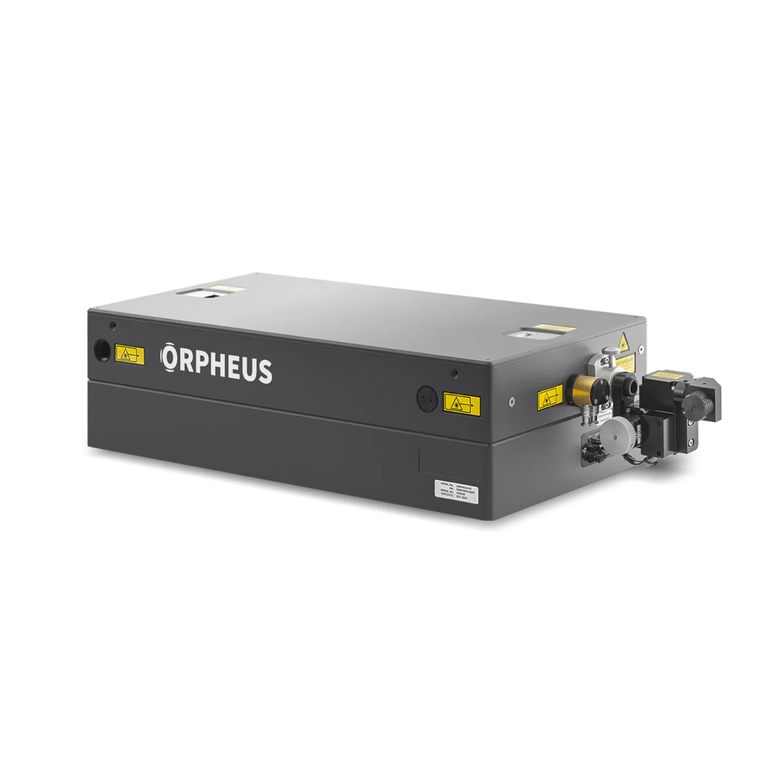
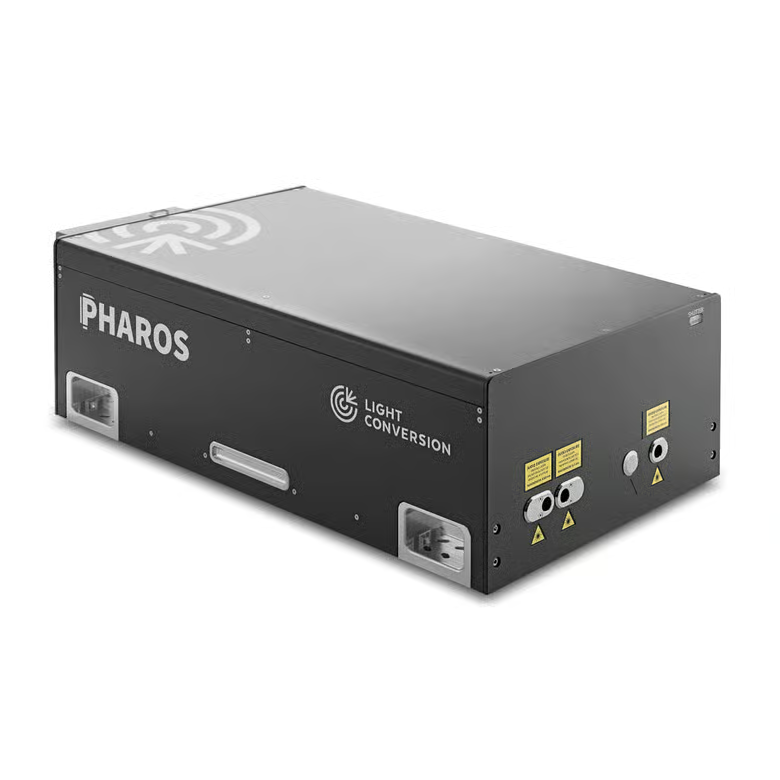
FSRS is available on the HARPIA spectroscopy system, giving vibrational structural information with < 200 fs temporal and < 10 cm⁻¹ spectral resolution. The Raman pump can be generated with an SHBC when a fixed 515 nm output is enough, or with an SHBC and ORPHEUS-PS when a wide tuning range is needed. The system is pumped by a PHAROS femtosecond laser. FSRS dynamics of neoxanthin, acquired with the HARPIA-TB third-beam module. Measurement conditions: 25 kHz, 440 nm actinic pump at 200 nJ, 530 nm Raman pump at 300 nJ.