Ultrafast spectroscopy
Flash photolysis
The principle of flash photolysis is analogous to the femtosecond transient absorption experiment but with the delay in a nanosecond–microsecond range.
Introduction
What is flash photolysis?
The flash photolysis experiment is designed for measuring long-lived states of molecular systems. It is used to study light-induced processes in organic molecules, polymers, nanoparticles, and semiconductors, as well as photosynthesis and light-induced conformational changes in plants and other biological systems. The principle is analogous to femtosecond transient absorption, but the delay sits in the nanosecond–microsecond range. In femtosecond TA the delay is set by a mechanical stage; here the delayed probe comes from an electronically triggered external probe laser.
How it is measured
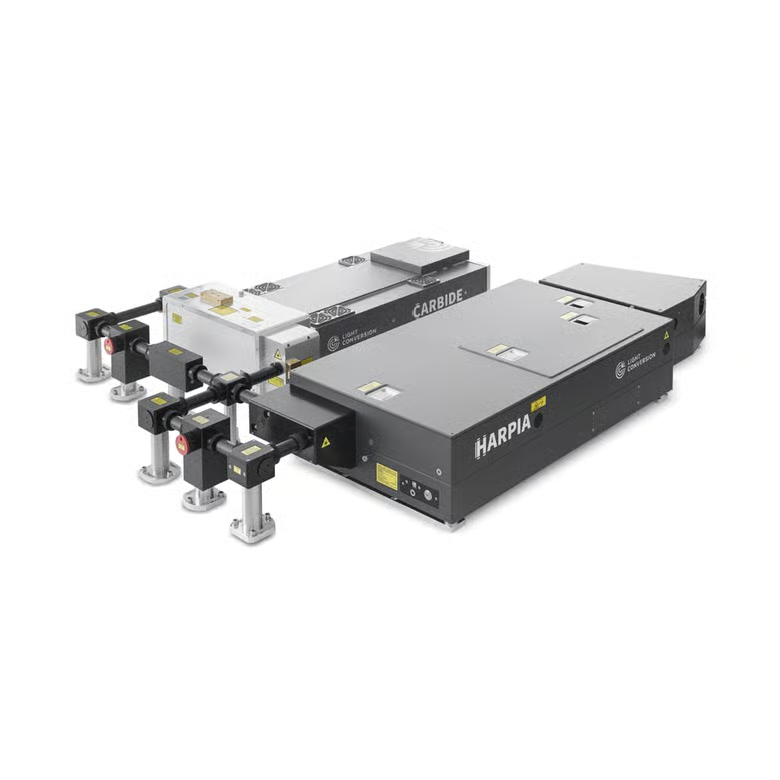
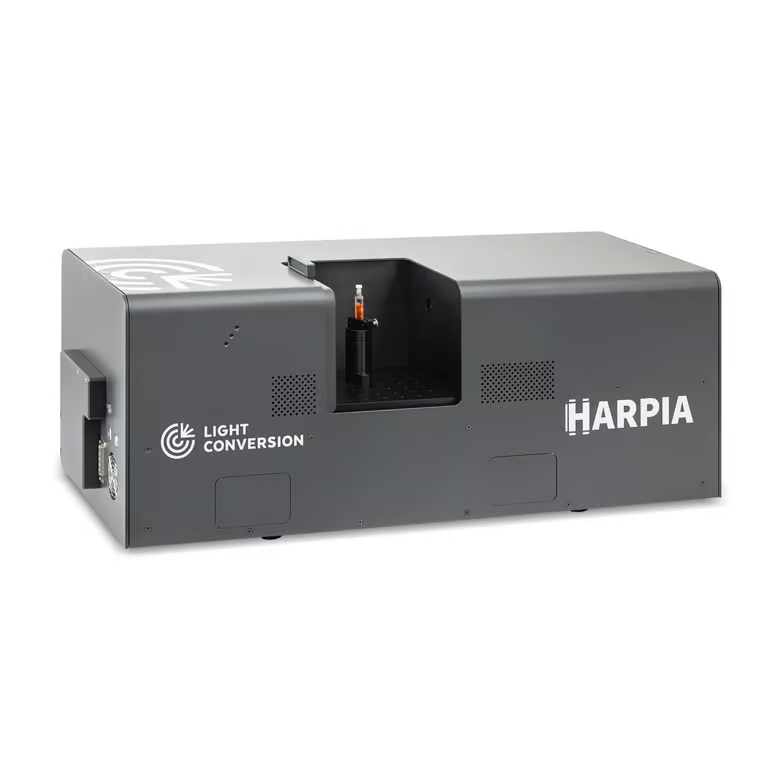
HARPIA-TA offers an optional flash-photolysis extension. Optical stability of CARBIDE and PHAROS lasers, reduced electronic jitter, and careful analysis of the traces support sub-10 ns temporal resolution. Nanosecond spectral dynamics of meso-tetraphenylporphine in solution, acquired with the HARPIA-TA-FP module. Measurement conditions: 1.8 kHz, 343 nm pump, 5.4 μJ pump energy.