Nonlinear and extreme light generation
THz generation
Terahertz radiation is extensively used to study the dynamics of collective motions in solids and liquids or image optically non-transparent samples.
Introduction
What THz generation is used for
Terahertz (THz) generation – electromagnetic radiation in the THz frequency range – is extensively used to study the dynamics of collective motions in solids and liquids or image optically non-transparent samples. The latter application is gaining significant attention in the security and defense sectors.
Optical rectification
Femtosecond lasers are ideal tools for producing 1–30 THz pulses with the desired spectral bandwidth and pulse duration at substantial energy levels. Several laser-based THz generation techniques are available, one of the most common being optical rectification. This second-order nonlinear optical process is a special case of difference-frequency generation (DFG). It can be described as intrapulse DFG, where the spectral components with different angular frequencies from the laser pulse are mixed in a nonlinear crystal, generating a new spectral component in the THz range.
Antennas, surfaces, and plasma
Furthermore, THz pulses can be generated by laser excitation of a photoconductive antenna or semiconductor surfaces. One of the most intriguing techniques is plasma-based THz generation. In particular, using air or gas plasma for THz generation is advantageous because, unlike nonlinear crystals and other bulk materials, gases do not suffer from a damage threshold and are continuously renewable, allowing them to be pumped at extremely high intensities.
Lasers used
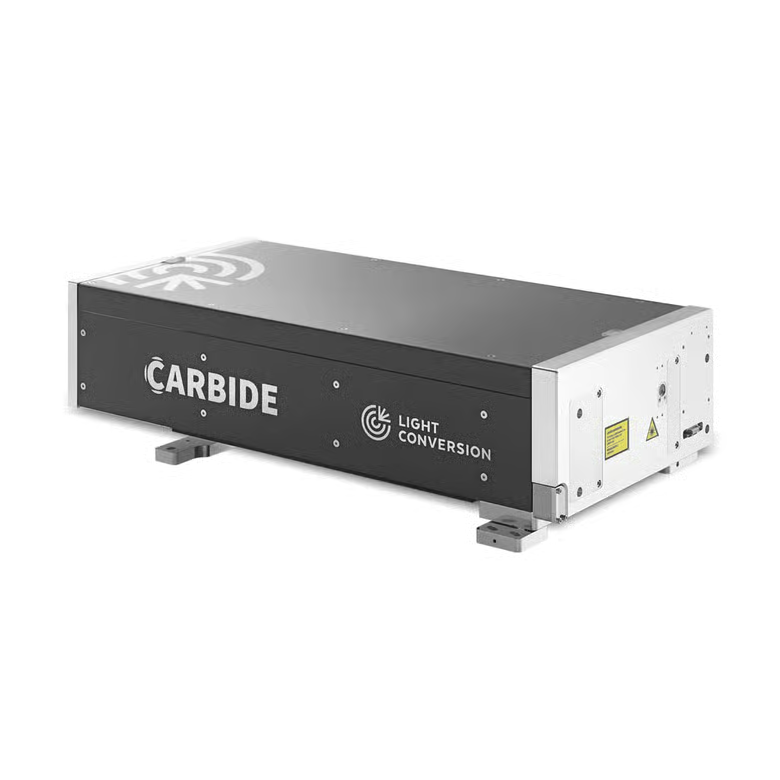
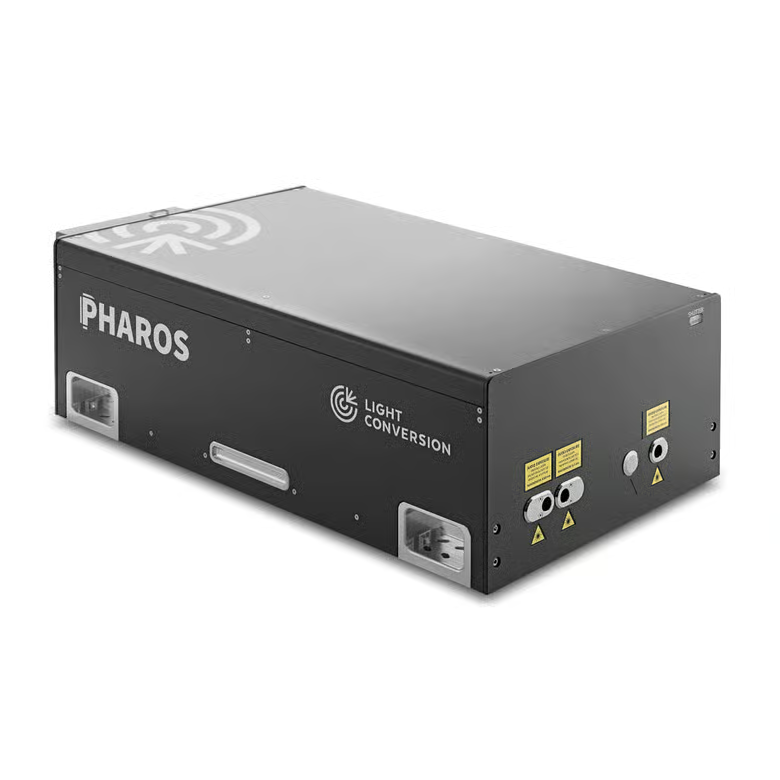
CARBIDE and PHAROS femtosecond lasers are used for this work. The laser output is compressible to sub-10 fs, enabling efficient THz generation.