Nonlinear and extreme light generation
X-ray generation
X-ray generation using ultrashort high-energy laser pulses is an attractive technique for producing X-rays that are used in spectroscopy and diffraction measurements.
Introduction
What laser-driven X-rays are used for
X-ray generation using ultrashort high-energy laser pulses is an attractive technique for applications in industry, medicine, and material science. In particular, the generated radiation can be applied in X-ray spectroscopy and diffraction measurements.
Why femtosecond pulses help
Femtosecond laser pulses offer unique advantages, enabling X-ray generation with femtosecond temporal and angstrom-scale spatial resolution. This allows for the direct observation of atomic-level structural changes in various materials, providing crucial insights into dynamic processes. Remarkably, the X-rays produced by femtosecond lasers are comparable to those generated by synchrotrons. However, femtosecond laser systems are significantly simpler, more compact, and accessible, making them practical for a wider range of applications.
Brightness and repetition rate
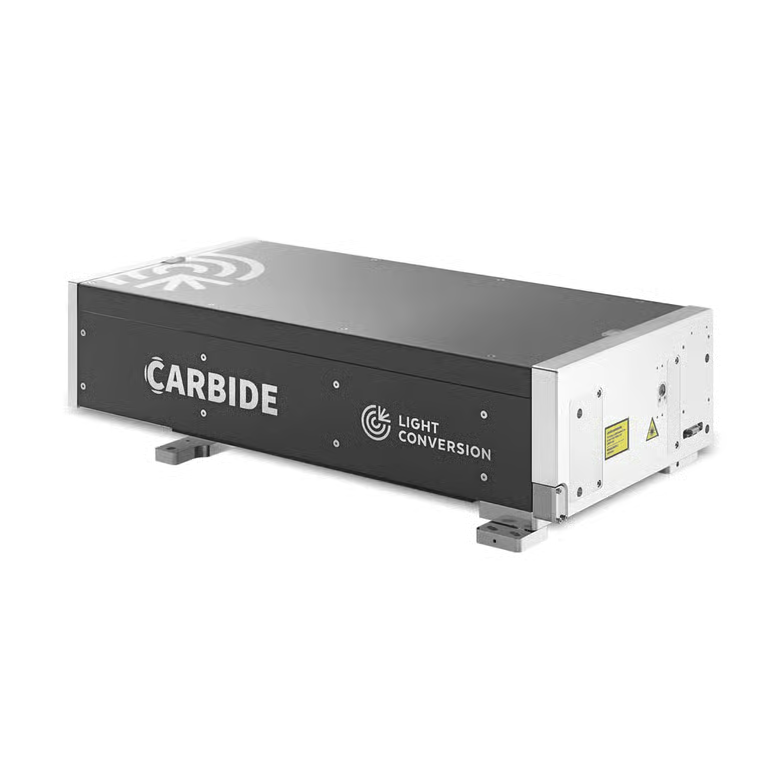
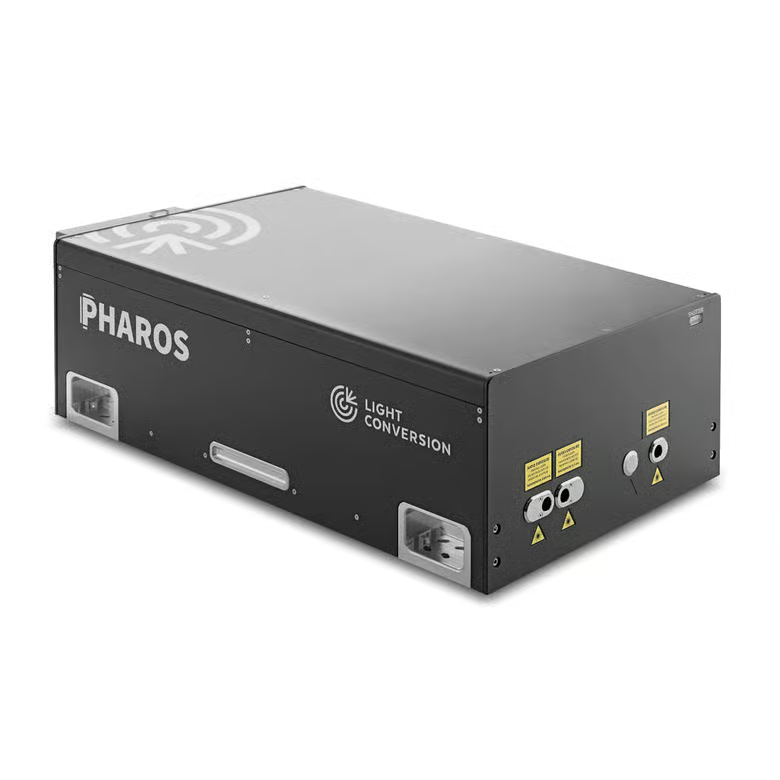
The brightness of the generated X-rays scales linearly with the laser repetition rate. High-repetition-rate and high-average-power femtosecond lasers achieve brightness and conversion efficiency comparable to multi-millijoule pulsed laser sources. This positions femtosecond lasers like CARBIDE and PHAROS as sources for compact, tabletop X-ray generation.